08 January, 2019

Nostalgia

It has been a long time since
I have been where I wanna be
It has been a long time since
I have seen what I wanna see
It has been a long time since
I have felt as I wanna feel
It has been a long time since
I have lived as I wanna live

A long time since I have felt,
the presence of my mother with me
the belief in her voice
in everything regarding me
Her every action for care of me
Her every thought for the better of me
All I can remember now are the tears
when we had parted
and her attempts to hide them from me

A long time since I have had
those fatherly hands to support me
those calm ears which understood me
those ages gone by, which made me what I am
those struggles of agony to make my future light
those brief periods of tension, which worked for better relations
those gentle eyes emitted serenity
that peaceful face displayed divinity

Oh how on earth can I repay the people
who gave me life as it is

A long time since I have been
with friends now forgotten
the moments with small joys
and periods of silence which went by
the cherished youth shall be remembered
even when its fragments disperse
for each will carry memories
of golden times in their hearts
I could not tell them what I felt
And we parted unknowingly
And made a mutual bond to remember
the times when we were together
The days we left is all I seek
them back wants the creature in me
I know that I cannot redeem my past
and my destiny does not allow that in my path
so I rest patiently remembering
the faces that once were with me

A long time since I have held
the small hand of my little sister
and talked my heart out
with feelings and joys and pains
and when those eyes
understanding every word I say
Not interrupting and letting me speak
To lessen the burden from me
I wish she was here with me
So once more I could tell her my pains
But alas! that time has gone
when I had someone to hear me

A long time since I have een
those twinkling eyes gaping at me
Her hand I held once and she had blushed,
my very existence wanting to be with her
To see her face to see her laugh
to hear her voice to feel her presence
to smell the fragrance of her har
to see her innocence to feel her breath
is what makes survival easy now
for the desire to meet her again
shall put me up for a long time

A long time since I have talked
with the teacher who taught me to think
the man who taught me to use my power
the man who taught me to fight my weakness
the man who made me what I am
the man who believed me in everything
with whom I felt so free
with whom I seek to be
I need my teacher yet once more
to ask for advice to take me again
into the realms unknown to me
His faith in me is my strength
and I try to live up to that
His teachings guide me in sorrow
His blessings guide me in strength

It has been a long time since
I have been what I was
I have lived as I lived
I have thought what I thought
I have loved whom I loved
I have laughed as I laughed
A long time since
I had faith in myself
I held head high and challenged the sky
But one day I will be back
and re-attain all I lost
It will be soon and I will be better
and we shall be paid by Almighty for our struggle
I will be back one day

Vishal Gupta

24 December, 2018

Book Review – Shantaram

I bought my Kindle in 2015. 3 years down, being true to my engineering nature, I didn’t spend another single penny on any book. The rationale being that you do not need to pay money for things that appear on the screen. This rule finally broke when I picked up Gregory David Robers’ (GDR) Shantaram. It’s not that I was unable to find the book. Both Shantaram and the sequel were easily available. Only when I’d spent months devouring them and realized that the journey was about to end, I bought the special author’s edition of The Mountain Shadow (TMS). Honestly, it is unfathomable that an Indian engineer would pay for an e-book he already has. But that’s how much I loved GDR’s writing.

Shantaram and its sequel, TMS are the epitome of good contemporary writing. The books give you plot, style, humour, thought, wisdom, romance, and an insight into the mind of a city that I have personally come to love over the years. GDR’s autobiographical account of his life in Mumbai give you a new lens to see the city. One that takes you through the underworld, slums, back markets, and weird fetishes that exist only in a maximum city. But while grappling with difficult subjects GDR makes sure we are entertained and puts in the right dose of comedy whenever the plot starts to get too dry. He reveals his writing technique in the author’s edition of TMS. He finds a painting that includes elements of his plot and carves out non-linear portions from the image into his writing. That gives the text a sense of chaos that is fitting to Mumbai, yet leaves a coherent narrative. It also helps the author in coming back to side-stories that one may be tempted to write at a go. It also adds another layer to the book that the reader is rewarded with every time he goes back to the book. Never before had I encountered such a writing technique and I’m thankful to GDR for sharing the process. It was worth the money.

But there’s more. GDR’s books work on central themes and he carefully creates characters adhering to them. In Shantaram, the central theme is that of exile. Only when the book ends does one realize that every character in the book, no matter how significant or insignificant, is an exile in some way. In TMS, the same characters who evolve, and sometimes literally metamorphose in unexpected new ways explore the ideas of love and faith. And of course in the stream of characters like Prabaker, Didier, Kavita Singh, Lisa, and Lin, this review would be incomplete without the mention of Karla.

Karla is a character created out of the pure grit and honed writing skills of GDR. It’s almost as if GDR took the wittiest writing he’s ever written or read in his life and sculpted Karla out of those words. To the extent that even when she’s not in a scene, other characters would say something deep and immediately attribute the quote to Karla. But in TMS we discover that Karla is more than just words. She can be showrunner when GDR needs her to be. And quite honestly, we could not have enough of her. GDR has mentioned in his last interview that he would create spin-offs for Karla and Didier. I don’t know how a book created exclusively for Karla would work. Just like Karla needs GDR’s writing, she also needs Lin’s thoughts to reach the reader. I’m not sure if we would like her in her own head. But I trust GDR’s writing enough to know that he wouldn’t disappoint.

GDR understands that a reader invests a lot of life in reading an 800-page book. He respects their time. Usually when I read a book, I mark any interesting quotes I discover in it. The last book that I noted down quotes from was The Fault in Our Stars. I found dozens in Shantaram and TMS. Here, I want to share 22. Why just 22? Well, for one thing, I’d like you to visit the books yourself and discover your own wisdom. Secondly, it makes for much better decoration.

Quotes from Shantaram and TMS

"Greed is human Kryptonite." - TMS, Chapter 18
"Love: desire, stripped of hunger." - TMS, Chapter 47
"Power is the opposite of freedom." - TMS, Chapter 81
"Expectation, the ghost of reputation." - TMS, Chapter 69
"The truth is just inhibition, after 3 drinks." - TMS, Chapter 80
"If you're gonna do something, make an art of it." - TMS, Chapter 23
"The people showed thanks, rather than saying it." - Shantaram, Chapter 12
"An amateur is anyone who hasn't learned how not to do it." - TMS, Chapter 2
"Religion makes men soldiers, and war makes them apostles." - TMS, Version 15
"When will we demand peace, as passionately as we demand freedom?" - TMS, Chapter 80
"Depression only happens to people who don't know how to be sad." - Shantaram, Chapter 26
"News tells you what people did. Gossip tells you how much they enjoyed it." - Shantaram, Chapter 17
"Journalism, Didier once said to Ranjit, the media baron, the cure that becomes its own disease." - TMS, Chapter 34
"The Koran commands me to study everything, and learn everything, in order to serve Allah." - Shantaram, Chapter 33
"Corruption is a tax imposed on any society that doesn't pay people enough to repel it themselves." - TMS, Chapter 68
"The world is run by one million evil men, ten million stupid men, and a hundred million cowards." - Shantaram, Chapter 17
"It is always a fool's mistake, Didier once said to me, to be alone with someone you shouldn't have loved." - Shantaram, Chapter 42
"Friendship, for him, was measured by what men do and endure for one another, not by what they share and enjoy." - Shantaram, Chapter 31
"Cruelty is a kind of cowardice. Cruel laughter is the way cowards cry when they're not alone, and causing pain is how they grieve." - Shantaram, Chapter 21
"Only a wicked man would derive such benefit from good works. A good man, on the other hand, would simply be worn out and bad tempered." - Shantaram, Chapter 17
"Praising people behind their back is monstrously unfair, because the only thing you can't defend yourself against is the good that people say about you." - Shantaram, Chapter 31
"She wasn’t in love with me, and I couldn't be in love with her. But we made the night bright and the sunlight right a lot of the time, and never felt used or unloved." - TMS, Chapter 8

12 December, 2018

Book Review - Rich Dad Poor Dad


Rarely ever do you find a book with such consistent reviews from all its readers. Wanting to dabble with a light financial read, most of my friends recommended Rich Dad Poor Dad to me. ‘I wish I’d read this book when I was young’ everyone said. Yet when I told some other friends that I was reading Rich Dad Poor Dad, I heard a lot of ‘it’s just another self-help book’. And I do agree that Rich Dad Poor Dad remains a self-help book at its core. However, we cannot overlook the fact that it is a self-help book giving a very unique perspective on many technical and personality issues in financial thinking.

The most striking feature of the book to me was the underlying political debate. The book shows the difference in perspectives of a highly educated and socialist Poor Dad against a tax-fleeing capitalist Rich Dad. To a younger reader, it might not come across as striking. To me, it was one of the few good arguments in favor of a conservative leadership in the USA (apart from Donald Trump’s Presidency).

The book imparts its wisdom in the form of 6 lessons, and then some more for bonus ones which are reproduced here in their skeletal form. To be sure, you need to read the book if you want to truly grasp their essence. I merely present them here for you to judge if the book is for you or not.

Lesson 1: The Rich Don’t Work for Money

Wealth is accumulated in 3 ways – (i) Earned, (ii) Expanded, and (iii) Created. In this lesson Kiyosaki argues that the Rich seek not to earn but to expand it. When you work for an income, you earn it. The Rich do not believe in that. Instead they seek to make money work for them thereby expanding it. He shares the perspective of most folks who seek to earn a higher income by working harder getting into a trap of higher needs and thus working further hard. It is not until you have money working for you that you can be free of this vicious cycle.

Lesson 2: Why Teach Financial Literacy

Kiyasaki introduces financial terms like “assets”, “liabilities”, etc in this chapter, but with a twist. While this chapter in no way prepares you for an accounting exam at college, it teaches you a perspective of looking at “wealth” which is quite intuitive, even if it doesn’t agree with the generally accepted accounting principles. To work with something we need to understand it first. And so Kiyosaki stresses upon the need for financial literacy. He then goes on to illustrate cash flow patterns for different types of individuals and welcomes you to choose what kind of person would you like to be. He also illustrates the different assets and liabilities and their impact on individual wealth.

Lesson 3: Mind Your Own Business

At the outset it seems like another chapter on being an entrepreneur. But that was Chapter 1. Here Kiyosaki explains the perspective of looking at businesses and understanding them. You need to know what you are doing. For example, Nokia looked at itself as a phone company and failed while Apple saw itself as a technology company, going wherever technology led it, and often leading technology places. What would happen if Google saw itself as an advertising company in the early 2000s? Next he explains the different kinds of investments you can make but always remember, that it is your business and hence your job to understand what it is.

Lesson 4: The History of Taxes and the Power of Corporations

Kiyosaki takes us on a history lesson now slowly revealing a very conservative outlook on money. On a personal note, it is heartening to see the conflict between conservative-capitalism and liberal-socialism. I’d have loved to read of a liberal-capitalism system in the book. But I don’t get to make choices about the world in live in. Kiyosaki explains how taxes were started in the USA and UK and how it inevitably led to the middle-class being taxed in effect while the rich escaped. He misses out, perhaps consciously, on the economic perspective of dealing with issues of disparity and unemployment. But Kiyosaki isn’t interested in the Macroeconomic issues. It only tells you one thing – shield yourself from the government and get rich!

Lesson 5: The Rich Invent Money

Ever wondered how some people just seem to get money out of a whim, as if it is indeed growing on tress. In this lesson Kiyosaki shares tips and techniques on how the rich are able to invent money from scratch. The foundation is laid in the previous chapters, i.e. of what is money. Once you learn that money is nothing but promises and trust, it’s easy to see how it can be invented out of sheer nothingness. The secret basically lies in 3 skills – (i) Finding opportunities which most people will miss, (ii) Raising money, and (iii) Organizing smart people.

Lesson 6: Work to Learn, Don’t Work for Money

Kiyasaki emphasizes on the importance of learning, especially learning sales. And the best way to do that is through practice. Learning to hear the resounding “no”. Learning persistence. And learning the perspective that only the Rich seem to know. He shares his own experience by illustrating a conversation with a very good writer who wanted to be a “best-selling author”. But she refused to acknowledge the difference between “best-selling” a “best-writing”. Similarly, it is not enough to be good at what you do. It’s important to do better things!

Kiyasaki then goes on to describe the obstacles people face in following the above lessons. Then he tries to comment on the motivations one needs to get started on the path. Lastly, he comes up with a bonus round of Do’s. Action steps if everything above was too much theory and nothing practical.

Kiyasaki ends with another parable on how to pay for a child’s education with just $ 7,000. And then the book has some advertising on other books and products Kiyasaki is associated with. After all, he too is looking to make money out of this.

Yes, you may argue that this is just another self-help book and the author is looking to be invited to another motivational talk session to some big university. And that is true. But there are a few good self-help books on the way. Rich Dad Poor Dad seems to be one of them. While it imparts no traditional financial knowledge, it offers a different perspective to look at things. And once in a while, it’s good to accept a newer perspective.

23 November, 2018

Book review - The Fault in our stars

A brilliant book by John Green which attacks on a psychological level while you are immersed in the captivating plot. There’s much more to be taken from the book which cannot be done while reading in a flow. One needs to go over and reflect. It is not like an Ayn Rand novel where you seek to take in something from each chapter. In TFioS you reflect before you go to sleep. And after you wake up. And in between that. It offers some brilliant quotes for the reader to take back.

‘How are you?’ ‘Grand.’

‘Some infinities are bigger than other infinities.’

‘Pain demands to be felt.’

‘I’m on a roller coaster that only goes up!’

‘It would be a privilege to have my heart broken by you.’

The story disgusts, charms, enlightens, and makes you cry. You contemplate it all through the mind of a 16 year old girl learning to live with cancer. With each passing page, you know the best part of the journey is yet to come, but by far it has been grand! Which also brings fear. Much like the roller coaster described in the novel. And it offers the fall as well.

12 November, 2018

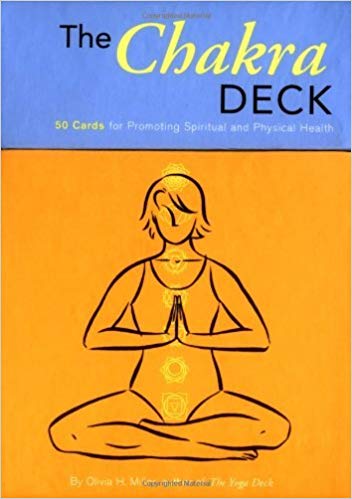
Book Review – The Chakra Deck

I started my journey with “The Chakra Deck” by Olivia Miller 7 months ago and have never looked back. I’d heard of the concept of chakras and had been curious about what they were and how they worked. Olivia Miller takes you through a step-by-step process of 50 cards slowly elucidating how to work with each chakra. Each chakra is described in a set of 7 cards with 2 explanation cards, 1 breathing card, 3 yoga poses, and a meditation technique. The 50th card relates to the aura which is a surrounding force for all chakras. I first went through the series in the prescribed order. Going through one chakra at a time, with 7 cards of each, spending a day of contemplation on each card. The set left me wanting for more. So I went through the deck again, this time going through all the explanation cards first, then all the breathing cards, all yoga poses, and finally all meditation cards. Lusting for more, I did the entire thing again in random order. This time I was done. Going through 50 cards 3 times took me 7 months, mostly due to my own lethargy. Nevertheless, meditation has become a daily part of my life right now. As I explore newer techniques and avenues to help mind, body, and soul, I’ve made a short summary of the deck for my own ready reference. Feel free to use.