11 May, 2025

Naya Bharat 2/8 - The Hare vs. the Turtle (vs. Pollution)

Disclaimer: No Hares or Tortoises were harmed during the writing of this story. Or maybe they were harmed. Who knows? We were busy writing.


It started one Monday, like all disasters do. The urban jungle had woken up to yet another Air Quality Index of “Are you kidding me?” The birds were coughing through their beaks. The bees were packing the hive. And the frogs were holding a referendum on emigration. The air was as thick as lies; and purifiers weren’t helping.


In the jungle lived a Hare that could run faster than logic on a WhatsApp forward; and a Tortoise who moved with the gentle grace of government paperwork. The Hare was lean, toned, and wore knockoff Playboy shoes made from the recycled guilt of urban vegans. He was the kind of creature who referred to breathing as “oxygenating”, eating as “fuelling”, and anything delicious as “carbs”. His fur was perpetually tousled, not from wind but from the sheer velocity of his own narcissism.


The Tortoise, on the other hand, was… slow. He carried a large backpack the size of a small ration shop stuffed with what he called “essentials for survival.” These included a battered thermos flask, a pack of Parle-G biscuits, and most crucially – an N-95 mask, which he treated with the reverence one might reserve for a family heirloom, or a packet of cocaine. The Tortoise was not fast, but he was prepared. His shell, already a natural armour, was adorned with stickers that read “Honk OK Please” and “Wait Side” though no one had ever been able to wait that long. He generally referred to the AQI as “severe”. The locals called it “4 pm”. Proud that he didn’t contribute at all to air pollution, he preferred to carry his home wherever he went so he never needed to take an Uber. In fact, he hadn’t even farted since 1984.


And so it began. It was a sweltering summer day. The papers reported that it was the hottest summer of the century. The Tortoise simply said “I’ve heard that before.” There was a haze of burnt leaves, burnt crops, and burnt hopes in the air. Visibility was low. Morality was lower. The Hare challenged the Tortoise for a race through the jungle. The Tortoise initially refused. He had given up racing since the whole incident with Zeno where he was blamed for messing up Achilles’ heel.


But someone important-looking overheard them – possibly a municipal officer, possibly a brand ambassador for ‘Breathe Bharat’ – and decided that a public race would be just the thing to boost civic morale. And so the race was declared. Posters were printed. At least six trees were cut down to make them. The prize? A lifetime supply of filtered water and a ridiculously overpriced apartment in Gurugram, which everyone knew was a scam but pretended to covet anyway.


So the race was set. The track wound through the jungle that had been molested by development. The starting point was a mall. The finish line was another mall. Neither was visible through the thick haze. In between, there were broken roads, a metro construction project, and areas marked as "green zones" which meant they had at least one potted plant.


“Ready, steady, choke!” shouted the unofficial referee, a street dog who promptly scampered off to chase a discarded samosa. And with that, the race began.


The Hare, fuelled by protein powder and his father’s unmet expectations, dashed off like ambition at a college reunion. “See you at the finish line, backpack boy!” he yelled over his shoulder as he zig-zagged around potholes, leapt over plastic bags, and overtook three fitness influencers shooting a reel titled “cardio is casteist”. The air was a thick soup of dust, diesel fumes, and the faint regret of a million morning commutes. The Hare didn’t care. He huffed and puffed, sucking in the atmosphere like it was a power-up in a video game. “Speed is life!” he declared, vaulting over a pile of garbage that might have once been a mattress.


Meanwhile the Tortoise moved like climate change – slow, deliberate, and likely to be dismissed. He adjusted his backpack straps, muttered something about “sustainable living,” and pulled out his N-95 mask. With the solemnity of a priest performing a ritual, he strapped it over his snout, the elastic snapping into place with a satisfying thwack. He trudged forward, slowly, past choking rivers and concrete jungles. On his way he found a signboard that said “plant a tree today” next to a bulldozer. A child tried to sell him a packet of incense sticks for “purification”.


The first kilometer was a disaster for the Hare. He zipped past a traffic jam so dense it resembled a modern art installation titled “Despair in Three Lanes.” Horns blared in a symphony of rage, and a truck driver leaned out to yell, “Oye, Usain Bolt ki Aulad! Jaanta hai mera Baap kaun hai?” The Hare ignored him, sucking in a lungful of exhaust as he darted between a bus and a cow that had decided the middle of the road was a fine place to relieve itself. His chest heaved, his Ray-Bans fogged up, and a faint wheeze crept into his breathing. “Just allergies,” he muttered, spitting out a gob of paan-stained phlegm that landed perilously close to a street vendor’s pile of roasted corn.


By kilometer three, the Hare’s bravado was unravelling. The pollution had thickened into a gray curtain, and his lungs felt like they were auditioning for a role in a horror movie. He coughed — a wet, rattling sound — and stumbled into a crowd of office-goers shoving their way toward a Metro station. “Move, move, I’m in a race!” he shouted, only to be elbowed in the ribs by a man carrying a briefcase and a grudge. The Hare’s pace slowed. His eyes watered. His Ray-Bans slipped down his nose, revealing bloodshot eyes that screamed for mercy. “This air,” he gasped, “is a conspiracy by the Tortoises to win!”


The Tortoise, now a full kilometer behind, was having a different experience. His N-95 mask filtered out the worst of the filth, and his backpack bobbed rhythmically as he navigated the chaos. He passed a group of schoolchildren wearing masks that matched their navy blue uniforms, with a logo that said “Study Hard, Breathe Harder” One of them waved at him. “Go, Tortoise Uncle!” she cheered. The Tortoise nodded gravely. “Thank you, small citizen,” he replied. “May your lungs outlast your textbooks.”


At kilometer five, the Hare hit a wall – figuratively and then literally. The figurative wall was his collapsing respiratory system; the literal one was a billboard advertising for luxury flats in Noida. He’d been weaving through a snarl of traffic when a tempo loaded with cement bags swerved, forcing him to leap aside and crash into the sign. He slumped to the ground, coughing so hard his ears flopped like wet laundry. “I’m fine,” he wheezed to a stray dog that had wandered over to investigate. “Totally fine. Winning. Definitely winning.” The dog peed on the billboard and trotted off.


The Tortoise, meanwhile, had reached a stretch of road lined with street vendors selling everything from knockoff N-95s to “pollution-proof” herbal teas. One vendor, a wiry man with an abdomen that had a will of its own, called out, “Oye, Tortoise bhai, buy my special chai! Clears the lungs, guaranteed!” The Tortoise paused, considered the offer, then shook his head. “I trust science, not chai,” he said, and kept moving. His backpack jingled faintly – perhaps the Parle-G biscuits were staging a minor rebellion.


By kilometer eight, the Hare was a wreck. His lungs sounded like a broken harmonium, and his once-proud sprint had devolved into a staggering limp. The crowds had thickened near Connaugh Place, where hawkers, tourists, and traffic cops jostled in a dance of mutual irritation. A cloud of dust kicked up by a passing bus enveloped him, and he collapsed onto a bench, hacking up something that looked suspiciously like a dung cake. “I should’ve bought a mask,” he croaked, as a pigeon landed nearby and promptly keeled over from the fumes.


The Tortoise, now closing the gap, trudged past a protest march – something about stubble burning, or maybe it was about the price of onions; no one could tell through the noise and the haze. His mask was smudged with grime, but his resolve was intact. “Slow and steady,” he muttered, “survives the race.” A traffic cop waved him through an intersection, mistaking him for some kind of eco-activist mascot.


At kilometer nine, the Hare made his last stand. He staggered to his feet, determined to reclaim his dignity. He took three steps, inhaled a lungful of what felt like molten tar, and collapsed again, this time into a pile of leaves that had been swept into the gutter by an overzealous municipal worker. His Playboy shoes fell off, revealing eyes that begged for an oxygen tank. “Pollution,” he whispered, “you’ve beaten me.”


The Tortoise crossed the finish line at just as the sun dipped below the horizon, turning the smog into a sickly orange glow. A small crowd had gathered – mostly street dogs and a few bored tourists – and they clapped politely as he raised a claw in triumph. The referee dog reappeared, dragging half a chapatti from somewhere. “Winner!” he barked, then wandered off again.


The Hare arrived an hour later, carried on a makeshift stretcher by two autorickshaw drivers who’d taken pity on him. His fur was gray with dust, his lungs were a symphony of despair, and his ego was in tatters. “I demand a rematch,” he croaked. “On a treadmill. Indoors. With an air purifier.”


The Tortoise, sipping from his steel bottle, looked at him with pity. “Speed is a delusion,” he said, “when the air itself is your enemy.” He offered the Hare a spare N-95 mask from his backpack. The Hare took it, too broken to argue.


And so, the tale of the Hare and the Tortoise became legend, whispered between sips of chai and honks of traffic. It was said that the Hare founded a start-up called “HareCare” that provided oxygen as a service. Meanwhile, the Tortoise was last seen trudging towards his new apartment that had once been a landfill, now renamed “Eco Heights”.


04 May, 2025

Naya Bharat 1/8 - Tinderella and the Fairy God-Tai

Once upon a time, in a land far-far away – because modern public discourse requires that we avoid talking of here and now – there was a crumbling haveli inherited in alimony from a disgruntled husband. There lived Tinderella. CA Tinderella as per her Facebook profile. She spent her days drowning in an ocean of paperwork and swiping left on a multitude of dating apps. Her stepmother, a beady-eyed woman named G. Esti Devi, and her two stepsisters, Formika and Redtapia, had turned her life into a nightmare of compliance forms and tax audits. “File INC-28!” G. Esti Devi would shriek whenever a guest would visit, “and make a disclosure in the notes while you’re at it!”


Tinderella’s days were spent sweeping, swiping, and filling out forms – all signed, stamped, notarized, scanned, and placed in an easily findable folder. The forms would be filed in triplicate – always in triplicate – because the tax office needed one copy for themselves, one copy for their files, and one to lose to mice. Tinderella’s only companions were a pair of overworked parrots who were trying to form a union, and a stray dog named PANkaj, who barked every time someone mentioned “Aadhaar linkage.”


One day a courier arrived – sweaty, late, and demanding chai-paani despite delivering an already opened envelope. Inside was a garish invitation: the King was throwing a grand ball to find a bride for young prince Upi. “All eligible maidens must attend,” it read, “subject to biometric verification. Dress code: taxable silk.” G. Esti Devi cackled, “Formika and Redtapia will go. Tinderella, you stay here and calculate our input tax credit.”


The night of the ball arrived and Tinderella sat alone, surrounding by stacks of payment vouchers, muttering, “if only I could escape this cess-pit.” Suddenly, the room filled with a haze of incense and the faint whiff of rotting papers. Before her stood a figure in a saree so crisp it could slice through the bureaucracy – not that it would. A woman adorning it with a stern gaze from bespectacled eyes and the annual budget floating beside her.


“Are you a genie?” Tinderella asked.

“Genie?”, the woman said quizzically. “Surely you know there’s no such things. Haven’t you not read about them in your NCERT books? No, I’m your fairy God-Tai. I’ve come to fix your life, though I must warn you: it might cause a slowdown in the auto industry.”


Tinderella blinked, “auto industry? I’m just trying to survive my stepmother’s tax evasion schemes!”


The God-Tai waved a dismissive hand. “Markets are all about sentiment my dear. Now let’s get you to that ball. But first, we need to rationalize your… asset.”

“What do you mean?” Tinderella said self-consciously.

The God-Tai ignored Tinderella like a Finance Minister who doesn’t contest elections and snapped her fingers. A swarm of glowing forms descended – GST-TRAN-1, 26AS, MGT-7, and something called “Declaration of intent of compliance towards enforcement agencies”.

“Fill these out,” the God-Tai said. “No ball without compliance.”


“But I don’t have a dress!” Tinderella protested.


The God-Tai smirked. “There are enough incentives in the textile sector – didn’t you hear my last speech? Here’s a saree with 5% GST included. Though the Gujarati loom it came from is mysteriously untaxed.” With a flourish, she conjured a shimmering silk saree, slightly frayed at the edges because “we must promote handloom, even if it’s substandard.” Next, she pointed at a pumpkin rotting in the courtyard. “That’ll be your chariot. Low emissions, high depreciation.”


The pumpkin shuddered as if being molested by a wet weasel, and transformed into a creaky autorickshaw with a meter that ticked on even while stationary. A driver materialized, chewing paan and spitting crimson streaks onto the ground. “Name’s Bakshesh,” he grunted through rotting teeth that would put Ajay Devgan to shame. “Where to madam? Fifty rupees extra.”


Tinderella hesitated. “But my shoes…”


The God-Tai, now getting visibly irritated by the endless demands of this entitled Gen-Z brat, thrust forward a pair of glass slippers. “Imported. No tariffs, because I say so. Consider it a gift from the Make in India initiative.” Then with a grave tone straight out of a budget address, she added, “be back by midnight, or the ED will find you. Also, I’ve rationalized midnight to 11:45 PM to align with fiscal discipline.”


Off Tinderella went, rattling through potholed streets in the autorickshaw. Bakshesh turned mid-journey and leered, “nice saree. You got cash? No UPI. Also, toll ahead – gimme hundred rupees.” Tinderella, having no money thanks to G. Esti Devi siphoning her savings into an offshore shell company, offered a sheepish smile, “can’t you… let it slide?”


Bakshesh spa out the window. “No money, no ball. Rules are rules. Unless you’ve got a friend in the ministry.”


At that moment, the autorickshaw hit a speed bump, or possibly a sleeping cow, and one glass slipper flew out, landing in a gutter. Tinderella, now one-shoe-ed and desperate, begged Bakshesh to keep going. Grumbling, he did, but only after extorting a promise of chai-paani later.


The King’s palace was a gaudy monstrosity of marble and unpaid contractor bills. Inside, Prince Upi twirled maidens across the dance floor, scanning their QR codes. Formika and Redtapia were there, drowning in cheap perfume and arguing over who’d claim the prince’s digital wallet. Then Tinderella entered, hobbling on one slipper, her saree shimmering under the disco lights, after installing which the contractor was able to buy a safe haven in the Caribbean islands.


The prince spotted her instantly. “Who is this glitch in the system?” he murmured, captivated by her aura of quiet rebellion. They danced, awkwardly because Tinderella wore only one ill-fitted shoe, and he asked, “What’s your name?”


“Tinderella,” she replied. “But my salary is below the taxation threshold. So I never got a PAN card made.”


“Fascinating,” said Prince Upi. “I’ve never met anyone so… untaxable.”


Just then, the palace clock chimed 11:45 PM. The God-Tai’s warning echoed in Tinderella’s mind. “I’ve got to go!” she cried, bolting for the exit. In her haste, the second glass slipper slipped off, clattering onto the marble. Prince Upi lunged for it, shouting, “Wait! I didn’t get your account details!” But she was gone, vanishing into the night with Bakshesh honking behind her.


The next morning the streets buzzed with news: Prince Upi was scouring the city for the owner of the glass slipper. “It’s a matter of national security,” he declared. “Also, I’m in love.” He dispatched his royal bureaucrats, armed with measuring tape and Form KYC-1, to every household.


Back at the haveli, G. Esti Devi was livid. “She went to the ball!?” she screeched like an old tyre, shoving Formika and Redtapia forward. “Fit that slipper on them! Forge the receipts if you have to!” The bureaucrats arrived, sweating in polyester uniforms, and demanded Formika’s foot. It was too wide – years of stomping over Cinderella’s dreams had bloated it. Redtapia’s was too long, a side effect of chasing tax loopholes. Both tried bribery, but the bureaucrats, for once, were incorruptible – mostly because Prince Upi had promised them a Diwali bonus.


Tinderella cowered in the corner, clutching PANkaj. “She’s just a servant!” G. Esti Devi snapped. “No PAN, no slipper!” But Prince Upi pushed past, holding the glass slipper aloft like a budget surplus. “Let’s see your foot,” he said. It fir perfectly.


“It’s her,” Prince Upi exclaimed, despite the bureaucrats wondering if this was the proper way of identifying a girl the prince claimed to love. “My untaxable love!” He turned to the God-Tai, who’d appeared in a puff of incense, ledger still floating. “Fairy God-Tai, how do we marry? What’s the process?”


The God-Tai adjusted her saree. “Simple. File Form MAR-69 in triplicate, pay 28% GST on the catering, and submit an affidavit swearing your love isn’t an immigration scheme. Oh and the onion prices are rising, so don’t blame me if the food is subpar – it’s market forces.”


The wedding was a bureaucratic circus. Bakshesh demanded Rs. 500 to drive the couple to the mandap, muttering, “no tip, no trip.” The priest insisted on a fee to appease the Gods and the guests grumbled about the cess on gifts. The God-Tai gave a speech: “This union proves that the country is a 5-trillion-rupee economy in sentiment, if not in reality. Now, please, link your blessings to Aadhaar.”


And so, Tinderella and Prince Upi lived happily ever after – or as happily as one can in a country where the taxman lurks behind every joke. G. Esti Devi was audited into oblivion, Formika and Redtapia opened a failing compliance consultancy, and the God-Tai vanished to deliver another cryptic budget speech. As for Bakshesh, he’s still out there, overcharging for rides and spitting paan at the system.

27 April, 2025

कश्मीर, शाम, और काहवा

बड़े दिनों के बाद, आज ढलते सूरज से चंद बातें करने का मौका मिला है 

"किधर थे इतने दिन?" मन की चादर ओढ़े वक़्त सवाल पूछता है 

"क्या लिखना छोड़ दिया था, के सोचना?"

वो जवाब नहीं चाहता, बस मज़ाक उड़ाना जानता है 

ढलते सूरज से भी भला किसीको जवाब मिले हैं कभी?

वो तो बस पूछता रहता है 

शायद कभी-कभी सही सवाल भी कोई जवाब ही होता है 


पीछे से एक आवाज़ आती है 

"अरी चाय बना दीजो ज़रा," अम्मा गुहार लगाती है 

अब अम्मा को क्या पता, ढलते सूरज से हमारा कितना पुराना नाता है 

मैं जवाब देती हूँ, "अरि ठहरो, थोड़ा शाम-भर तो इंतज़ार करि लो 

बड़ी दिनों बाद फुर्सत में हूँ, ज़रा सूरज को ढलने तो दो"


आधा आसमां जाती किरणों से रोशन है 

बादलों के पीछे से सूरज मानो लपक-कर

मुझे देख रहा है, ढलते हुए 

दूर कहीं से आज़ान की आवाज़ आ रही है 

हवा भी कुछ हौले से ही चल रही है 

कलियाँ भी सूरज को ढलता देख, नींद लेने की फिराक में हैं 

आसमां में भी अँधेरा, बढ़ने की ही कगार पे है 

सूरज से बातें नहीं हो रही, सिर्फ हलके मैं मुस्कुरा रही हूँ 

हर्फ़, हिज्र हंजुओं के मतलब के बारे में सोचती हूँ 

सोचती हूँ ये लफ्ज़ किसी कविता में पिरोये हुए सुन्दर दिखेंगे 

बहुत दिनों से कुछ लिखा  भी तो नहीं है 

जो लिखा, वो ज़िम्मेदारियों के नाम कर दिया 

अमा कंधों पर ज़िम्मेदारियों का बस्ता भी कुछ भारी-सा ही हो गया है 

अमा ढलता सूरज भी तो अब बल्ब की बत्ती सा हो गया है 


फिर पीछे आवाज़ आती है, "ये अटैची उतारियो ज़रा"

अम्मा को भी चैन नहीं है 

"अम्मा तनिक देर भर रुक तो जाओ भला

सूरज ढलने को है, इसे भी चैन से ढल जाने दो ज़रा"


आसमां में पंछी उड़ते है 

शायद सोच रहे हैं की ढलते सूरज का पीछा करें?

या फिर अँधेरे को ही अपना लें?

क्या है सही जवाब? किसे पता? क्या फर्क पड़ता है?

सूरज कोई सा भी हो, डूब ही जाएगा 

अँधेरा भी कौन सा हमेशा रह जाएगा 


अम्मा कहती है बहुत देर हो गयी, अब वापिस आजा 

शायद वक़्त आ गया है 

सूरज भी ढल गया है 

मैं अपने सवालों के साथ ही वापिस घर को चल देती हूँ 

भला ढलता सूरज भी कभी किसीको कोई जवाब बताता है?


विशाल गुप्ता 

२० मार्च, २०२५ 

20 April, 2025

MKC8 - The Rime of the Weary Resident

(1)

It is an ancient resident,
And he stoppeth one of three.
"By thy grizzled beard and weary eye,
Now wherefore stopp'st thou me?

The building gates are opened wide,
The movers they do haste;
To shift my goods to my new abode—
Why, man, dost thou lay waste?"

He holds him with his skinny hand,
"There was a time," quoth he—
"Hold off! Unhand me, gray-beard loon!"
Eftsoons his hand dropt he.

He holds him with his glittering eye—
The newcomer stood still,
And listens like a three years' child:
The Resident hath his will.

The newcomer sat on the dusty floor,
He cannot choose but hear;
And thus spake on that ancient man,
With voice so strange and clear:

"The building here is grand and tall,
Its face toward the sky;
But within its lofty, shadowed halls,
A thousand troubles lie.

Water, water, everywhere,
And all the boards did shrink;
Water, water, everywhere,
Nor any drop to drink.

From taps, the liquid trickles down,
As brown as autumn leaves;
It stains the sinks, it floods the floors,
And yet, no one believes.

For some, the water comes in jets,
That knock their pots away;
For others, it's a dribble thin,
That leaves them in dismay.

But hark, another tale I'll tell,
Of windows, high and wide;
Where people toss their rotten wares,
To see where they might bide.

A sandwich here, a curry there,
Sent flying to the breeze;
But lo! It finds a neighbor's pane,
And sticks with strangest ease.

The rain it drips, the wind it whips,
And through the glass it leaks;
The man below doth curse the skies,
For water on his cheeks.

Oh, the woes of window wars,
Where none are safe from spill;
For what goes out from one above,
May soon descend at will.

But still, the building stands so proud,
A marvel, to be sure;
Yet none within can rest aloud,
Their comfort so unsure.

(2)

The WhatsApp group, a cursed thing,
With thumbs that never sleep;
They rise, they fall, they bounce along,
In endless, mindless leap.

Messages of great import,
Are buried in the tide;
Beneath a sea of useless nods,
That never do abide.

"Good morning!" says a cheerful soul,
And thumbs arise in cheer;
But soon the news of water woes,
Is lost and disappears.

The pigeons too, a bane to all,
Their droppings foul and rude;
No feeding them, the rule decreed,
Lest cars be thus imbued.

And yet the feeders do persist,
Their grains they slyly throw;
And pigeons gather, undeterred,
To bring their messy woe.

But soft! The car park once again,
Becomes a battlefield;
Where cars are judged by status high,
And spots are never sealed.

The guest spots, prized and sacred ground,
Are guarded close and tight;
And woe betide the resident,
Who parks there in the night.

I once did try, with quiet plea,
To park where I might see;
But Mr. C, in his glee,
Did block my way with glee.

"Not for thee, this hallowed space,"
Quoth he with fiendish pride;
"Thy car must rest in yonder place,
And far from me abide."

But fortune smiled, in subtle guise,
As I made my final stand;
A deal was struck, with wary eyes,
And I did win my hand.

"Park here," he said, "but mind the rule,
That I shall now bestow;
Thou must ensure thy car is clean,
And never, never slow."

So now my car, with gleaming pride,
Doth rest in hallowed ground;
But I must watch, and ever hide,
Lest C come around.

(3)

The new resident stands in silent thought,
His mind a tangled maze;
He ponders on the tales he's heard,
In this strange, chaotic place.

He sees the old man’s crooked smile,
That hides a secret mirth;
And wonders at the twisted joy,
That springs from all this dearth.

The corridors echo with the cries,
Of neighbors locked in feud;
Of leaking pipes and pigeon fights,
Of rules that oft exclude.

Yet through it all, the ancient one,
Seems strangely undisturbed;
He finds a twisted satisfaction,
In chaos undeterred.

For in this house of endless strife,
Where peace is seldom found;
The old man walks, with quiet pride,
On this beleaguered ground.

He knows each crack, each faulty pipe,
Each spot where rot takes hold;
And watches with a knowing eye,
As new stories unfold.

The garbage tossed from window ledge,
The water seeping in;
The parking wars, the pigeon plague,
All cause his heart to grin.

For in the midst of all these woes,
Where others might despair;
The ancient resident alone,
Finds comfort in the air.

(4)

The newcomer, still standing there,
Now questions his intent;
Should he stay and bear the load,
Of life within this tent?

But then the old man speaks again,
In tones both soft and grave;
“Do not fear this place, my friend,
For you’ll learn to be brave.

For in the end, we all must find,
A way to cope with fate;
To live amidst the chaos here,
And not be filled with hate.

So welcome to this lofty tower,
Where madness finds its home;
Where every day’s an endless hour,
Of tales that make one moan.

But fear not, young one, you’ll survive,
And find your place in line;
Just learn to laugh, to jest, to thrive,
And you’ll be doing fine.”

The old man turns, his tale complete,
And shuffles down the hall;
The newcomer, with heavy feet,
Feels faint within the wall.

And as the elder fades from sight,
A final thought takes flight;
The ancient’s words, both sharp and bright,
Have left him in a fright.

But still, a flicker of resolve,
Lights up within his chest;
He’ll take the challenge, try to solve,
This building’s endless test.

The old man ends his dreary tale,
And turns him with a grin;
The new one shudders, feeling frail,
And knows not where to begin.

For in this place of many woes,
Where nothing seems to fit;
The ancient one finds joy, God knows,
In watching all of it.

And as he turns to walk away,
He whispers, just in case—
"At least, my friend, for all the pain,
The doors are in their place." 

13 April, 2025

MKC7 - And Up Comes the Toolbar

I generally prefer to use aliases for my characters. After all, people are rarely as heroic or as villainous as they are portrayed in a few short pages of a story taken out of context. Having said that, there’s one character that I would like my readers to be introduced to. Given the eternal state of our building's affairs, he's likely still running the annual committee, no matter when you are reading this. For the sake of anonymity, let’s just say his name starts with “C” and ends with “unil Agarwal.”


Mr. C was, shall we say, a recognizable figure. If you’ve ever had an uncle who insists on peering through your peephole through the wrong side of the door, you know exactly who I’m talking about. These are the self-appointed unregulated guardians who take it upon themselves to police all the written and unwritten morals and laws of the society. They’re unemployed enough to be given petty positions of power and are loud enough to make themselves heard. Sadly, those are the only two qualities modern leaders must possess in order to rise above the ranks. As for whether there’s anyone left to lead… that is a question best left unanswered.


So my family had a problem. Well if we are on the subject, my family had several problems. But we are choosing to focus on one particular problem today. Because (1) I don’t expect my readers to be my therapists, (2) most of you don’t care anyway, and (3) this particular problem will make us look rather…  Goood.


It’s a problem many of the urban rich face: two cars, one parking space. How did we end up with just one parking space in a premium building where two spaces were the norm, you ask? Well, the previous owner of our apartment kept one of the parking spots for himself. You see, he had three cars. And so, our problem began.


Faced with the dilemma of two cars and only one parking space, we did what any self-respecting urban family would do—we bought another parking space in the next building. Of course, we had to purchase an apartment to go with it, but that’s a tale for another time.


So, now we had two homes for our cars. One in our building, and one next door. It wasn’t too inconvenient, at least as long as our driver was the one fetching the car. But on Sundays, when I’d take the car out for my multiple rounds of... well, let’s just call it "recreational driving," I wanted to park the car in our building. Naturally.


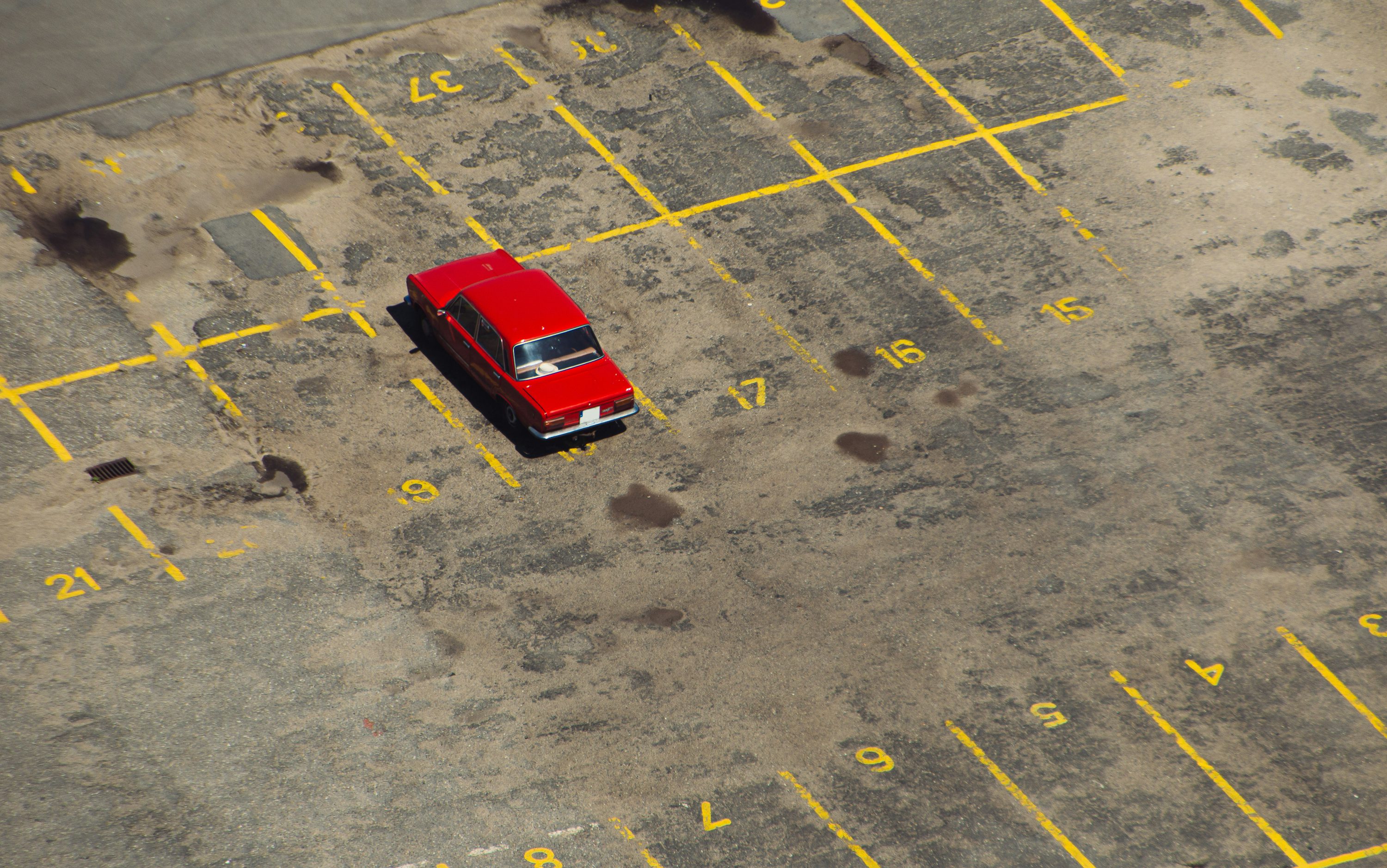
Enter the guest parking. Theoretically, this was the perfect solution. After all, the guest parking was for cars that weren’t usually parked in the building, right? It seemed logical to me. But Mr. C had other ideas. He decreed that guest parking was to be used exclusively by non-residents. If a resident, like me, wanted to park an extra car in the building, well, tough luck. According to Mr. C, the guest parking was meant only for guests. And by "guests," he meant non-residents. The fact that residents were, in a roundabout way, using the guest parking for their guests didn’t seem to bother him. The critical point was that the car should NOT be owned by a resident. And that, as far as Mr. C was concerned, was the law.


So one fine Sunday, as I pulled up to the building’s guest parking spot, I was greeted by the stern, unblinking eyes of Raju, the building watchman. Raju was a man who took his job very seriously, perhaps a little too seriously. His posture was as rigid as the iron gate he guarded, and his eyes narrowed as he saw me approaching. He was a man of few words, but when he spoke, it was as if the universe itself had ordained his declarations.


“Saab, you cannot park here,” Raju announced, standing firmly in front of the guest parking spot like a human barricade.


“Raju, this is the guest parking, and I’m just going to be here for a couple of hours,” I explained, assuming this would be a straightforward conversation.


Raju shook his head with the gravity of a man delivering bad news at a wedding. “Saab, guest parking is for guests. You are not a guest. You live here.”


“Yes, Raju, I live here. But this car doesn’t! It’s visiting from the next building. Technically, it’s a guest car,” I countered, thinking I’d found a loophole in his ironclad logic.


Raju didn’t budge. “Saab, rule is rule. Mr. C told me very strictly that no resident cars should park in guest parking.”


Of course, Mr. C had something to do with this. His obsession with enforcing every tiny rule in the building had turned him into a dictator of sorts. The rule was so that the residents would use their own parking space instead of using the more convenient guest parking space right outside the building gate. Not for cars that didn’t have a parking spot. But logic had left the building long ago. Mr. C had successfully replaced common sense with rules.


“Raju, this is getting ridiculous. It’s not like I’m parking here forever. Just a couple of hours. Besides, there’s plenty of space. No guests are even here!” I gestured toward the empty guest parking spots, hoping logic would prevail.


Raju squinted at me as if I’d just suggested that the earth was round. “Saab, if I let you park here, then what will happen when a guest comes?”


A logical argument. Finally!


I opened my mouth to respond, but before I could, a familiar voice boomed from behind me. “Raju! What’s going on here?”


And I saw logic flying out of the building again.


Mr. C himself had appeared, walking towards us with the air of a man who had caught someone violating an ancient code. He was wearing his usual attire: an expression of self-importance and a sweater vest that screamed “authority.”


“Ah, Mr. C., perfect timing. I was just trying to explain to Raju that I need to park here for a few hours,” I said, trying to keep my tone polite, though I could feel my patience wearing thin.


Mr. C looked at me as if I had just suggested we host a rock concert in the lobby. “Absolutely not! The guest parking is for guests. Residents cannot use it for their cars. That’s the rule!”


“And why exactly is that the rule? My car is not here most of the time. It’s only visiting from the next building,” I said, trying to sound reasonable but fully aware of how absurd this argument was becoming.


Mr. C crossed his arms, his eyes narrowing. “Because if we let one resident park here, soon everyone will want to park their extra cars in the guest spots. Chaos will ensue! We must maintain order.”


I took a deep breath, realizing I was dealing with someone who had clearly spent too much time memorizing the rulebook and not enough time living in the real world. But I wasn’t going to back down that easily. “Look, Mr. C, there’s no chaos here. It’s Sunday, there are no guests, and it’s just for a few hours.”


Mr. C looked like he was about to launch into another lecture when Raju suddenly interjected. “Saab, maybe we can make a compromise?”


Both Mr. C and I turned to look at Raju, surprised that he had something to offer in this power struggle. “Saab, maybe we allow Sir to park here, but only if he leaves his phone number with me. That way, if a guest comes, I can call him to move the car.”


Mr. C frowned, clearly unhappy with the idea of bending the rules, but after a long pause, he nodded. “Fine. But this is a one-time exception. And only because Raju will ensure the space is cleared if needed.”


I couldn’t believe it. I was actually going to win this ridiculous battle. “Deal!” I said, more enthusiastically than I probably should have.


As I handed over my phone number to Raju, Mr. C gave me a stern look. “Remember, this is a one-time exception. If you try this again, there will be consequences.”


I nodded, barely able to suppress a smile. “Understood, Mr. C Thank you for your understanding.”


As I parked the car and walked away, I couldn’t help but feel a small sense of victory. Sure, I had to leave my number with Raju, and sure, I’d have to move the car if anyone else needed the spot, but in the world of absurd building regulations, I had won.


Just as I was about to enter the building, Raju called after me, “Saab, also, if you could keep the engine running, just in case…”


And with that, I realized, even in victory, you can never truly win against the absurdity of building politics.